Doctors perform better when they are watched.
The fortunate side-effect of AI ambience is the Hawthorne effect.

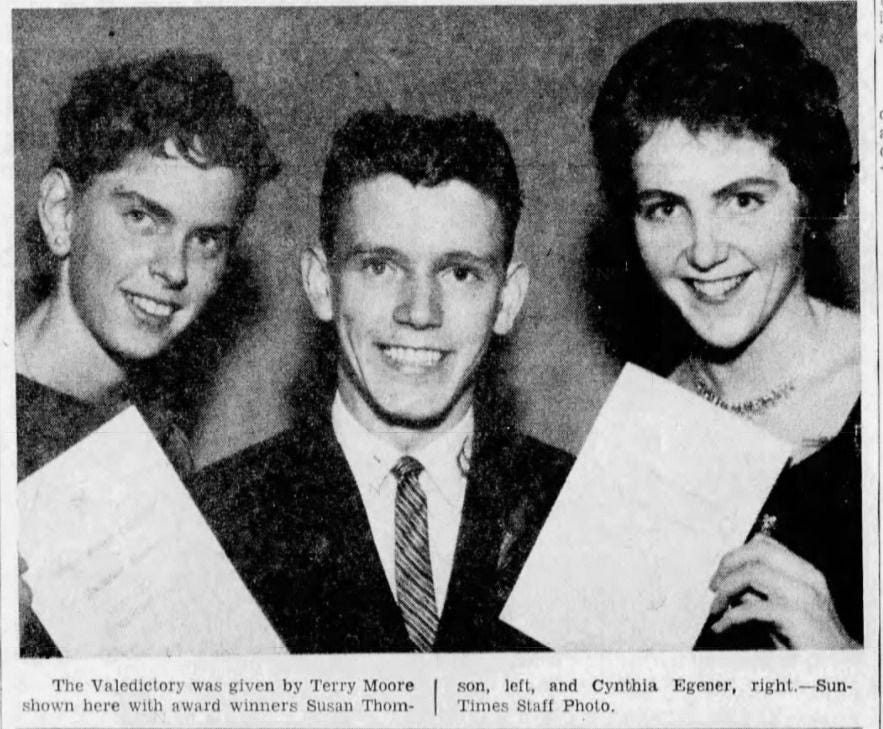
This is Dr. Terry Moore. I love the man.
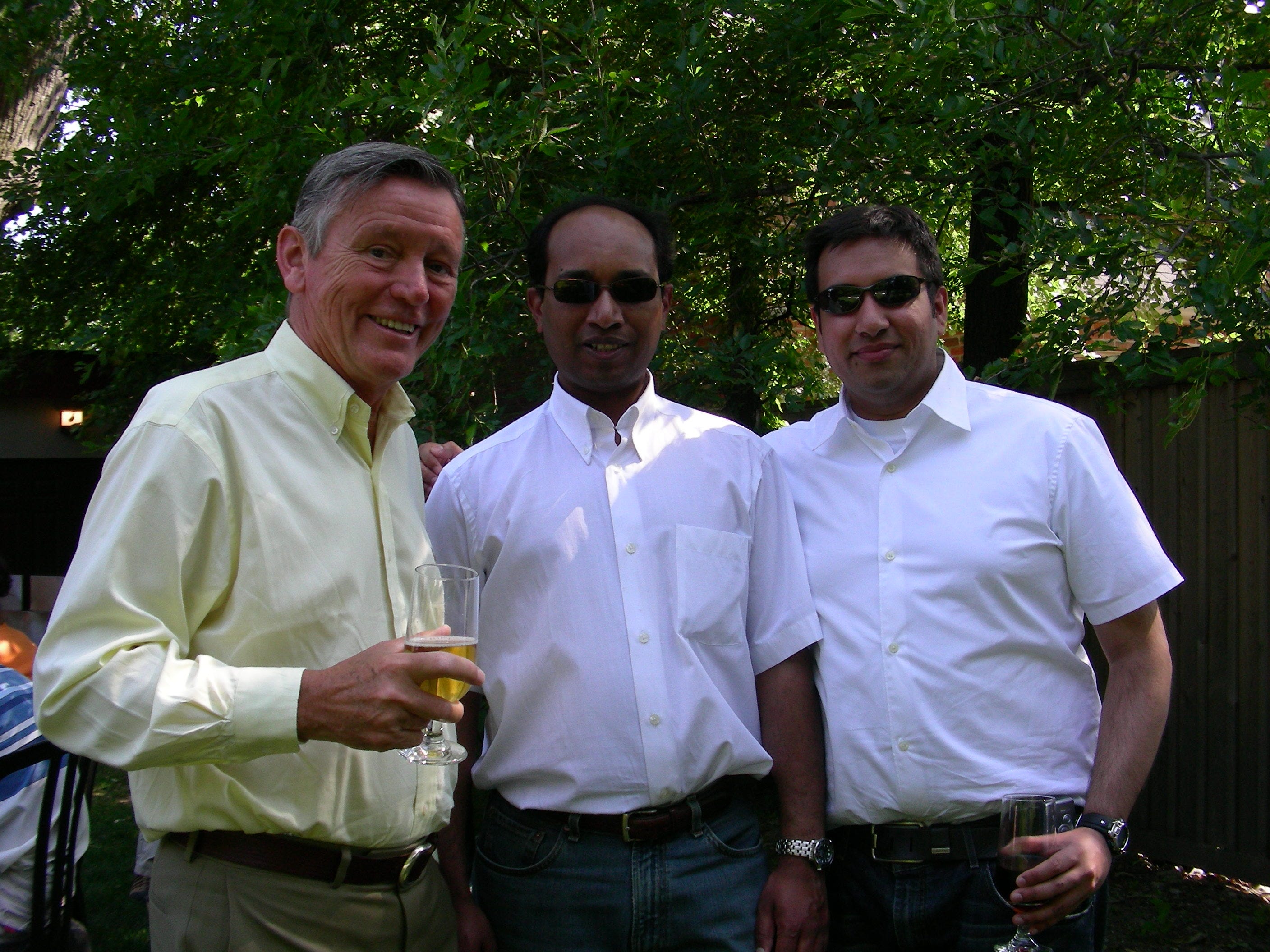
Former program director for internal medicine and gastroenterology at the University of Toronto. I did rotations with him as a 3rd year student, as a PGY1, and as a PGY4 - and witnessed a master teacher, a spectacular clinician, and a gem of a person.
And he did one thing that I hated when I was a trainee.
He made us review in front of the patient.
What does that mean?
When house staff typically presented cases after being on call - in the morning, we would hunker in a room, tell the attending what we did the night before in detail, and get taught about the case. In general medicine, it evolved into morning report which was operationalized in Toronto when I was going through as the major teaching round of the day. Safe space, in a room with colleagues, if you screwed up you were told you screwed up, lots of feedback both positive and negative (and a bit of medical Jeopardy).
But Dr. Moore eschewed ALL of that. He didn’t want to hear a thing in private. He wanted you to present in front of the source of truth - the patient. With EVERYONE watching you.
So he always had his rounds only in patient rooms. He started late so everyone was usually there - patient, family, nurses, allied, porters, other staff and other students - all eyes on you. The patient and family would correct you if they thought you were wrong. You stammered to make sure everything was perfect. You had to make sure all your orders were correct the night before, and you had copies of all the tests because they were going to ask about them. You never wore scrubs (he didn’t) - so you showered post call and put on a shirt and tie.
Because the show was on. And everyone was watching.
The Hawthorne effect
The Hawthorne effect is the idea that people behave differently when they know they are being observed. It may be apocryphal but it may have taken its name from a factory where lighting changes - which illuminated what people were doing - led to an increase in productivity.
The cleanest example (pun intended) in medicine is hand hygiene. Pool the studies and clinicians wash their hands more reliably when they know someone is auditing them. The best recent synthesis in primary care puts the effect at roughly a 1.41 odds ratio - with some pretty big maybe beside this.
As a med-ed researcher trying to do practical trials relying on video to capture effect, I hated it for good reason. If your subjects behave differently because you are watching, you cannot measure what they would have done on their own. It was like a med-ed Schrodinger effect.
But isn’t this a good thing?
If you watch people, they have better hand hygiene. That’s a good thing isn’t it?
Being watched works on performance in three ways. It raises attention, because people are more deliberate when the work can be reviewed. It raises accountability, because a standard is harder to wave off when someone can revisit what you did. And it raises the odds that a slip gets caught, because omissions become visible instead of vanishing.
When Teodor Grantcharov's group put a black box in the operating room at St. Mike’s, they did not find one dramatic disaster per case. They found something more useful: a median of twenty small errors a case, the kind that normally disappear the instant the case ends. You cannot fix what no one can see. But now you could catch them.
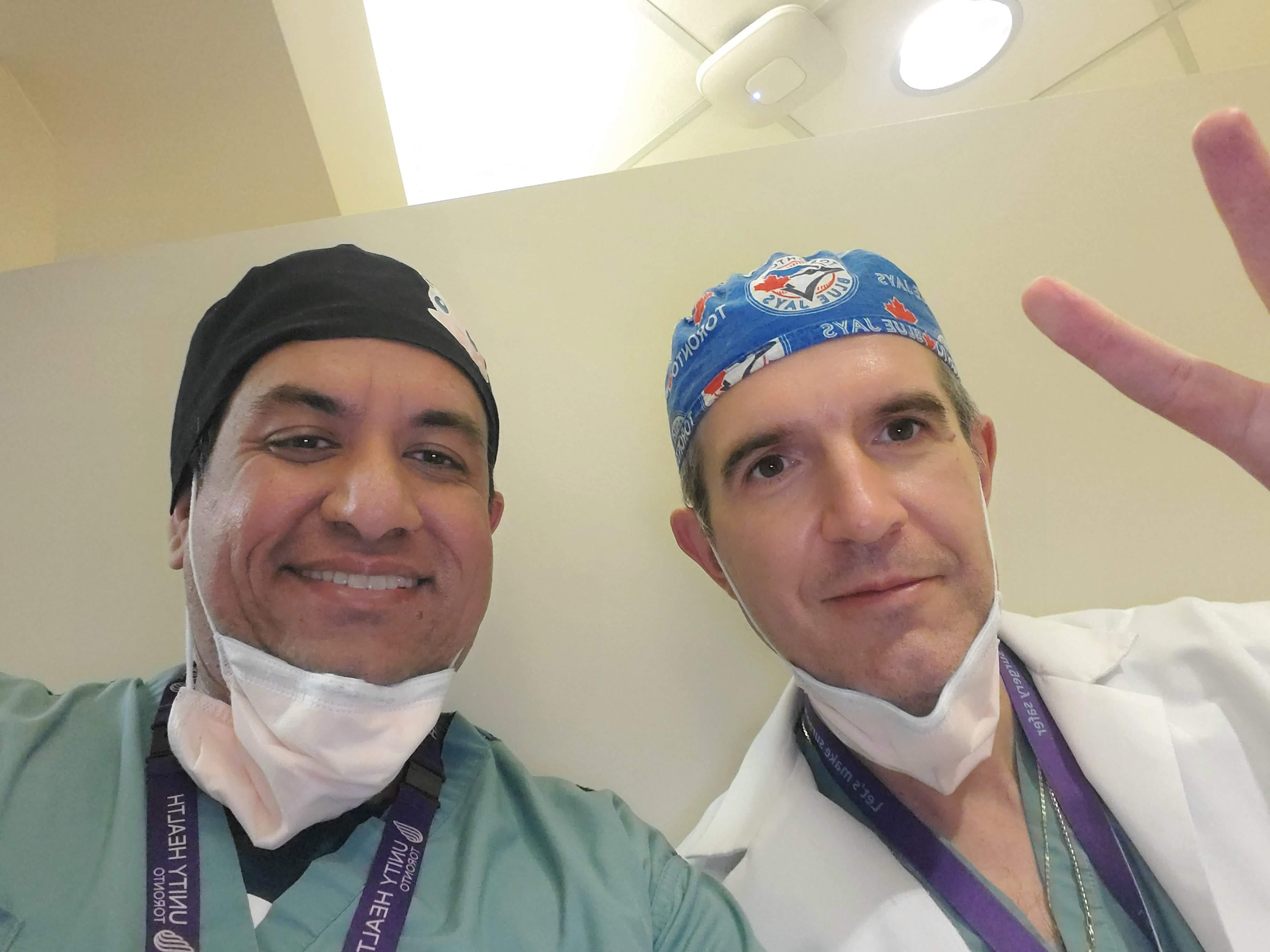
(crazy we used to work together once, seems like a lifetime ago)
The ambient era is here
The difference is that the ambient era is now here. Thanks to the rapid adoption of AI scribes.
If you have been in a clinic in the last year, you have probably already seen it. The doctor gets your consent, opens an app, puts the phone face-down on the desk, and just talks to you. No typing. No back turned to you while they clatter at a keyboard. The visit unfolds like an actual conversation, and the whole time, in the background, an ambient scribe is listening.
These tools sit in the room and capture the entire encounter as audio. They transcribe it. Then a large language model turns that transcript into a structured note - history, exam, assessment, plan - and drops it into the chart for the clinician to check and sign. The pitch is documentation relief: less time typing, less time after hours, less burnout. And the early data broadly support that pitch. Real cohort studies exist, the systematic reviews are piling up, clinician-experience reports are accumulating, and the 2026 evaluations have moved past note-taking into efficiency and patient-centred care and real outpatient trials.
But look at what just happened. To write the note, the tool had to capture the encounter. The intake is the whole visit. Every question you asked and every one you forgot. The way you explained the plan. Whether the patient’s real worry ever actually got addressed. A faithful, replayable record of clinical performance, created as a byproduct of trying to save the doctor some typing.
That anyone can access after.
We didn’t just create a new scribe assistant. We installed an observer.
And medical students and residents will be in that environment.
Why the patient wins
When we watch physicians, patients do better.
Back to hand hygiene, because it is the cleanest (oops I did it again). When they ran a hospital-wide hand-hygiene programme in Geneva built on observation, compliance climbed from 48% to 66%, AND nosocomial infections fell from 16.9% to 9.9%. A central-line checklist, paired with visible measurement, dropped bloodstream infections by two thirds and held it for a year and a half. Add a tele-ICU to a set of intensive care units - a team observing remotely through cameras and data feeds - and adjusted mortality drops by an odds ratio of 0.40, mostly by catching lapses in best practice the bedside team had stopped noticing. And in GI! Monitoring endoscopists and feeding back their numbers raises the adenoma detection rate, in one meta-analysis from 27% to 36%, whether or not they even know they are being watched. And the adenoma detection rate is not a vanity metric.
And ambient AI is an observer that can do it at scale.
Why the student wins
Here is where it gets interesting for education, because the same visibility pays off for the medical learner.
Physicians are lousy judges of their own competence from memory alone. Self-assessment only gets good when you feed it external data. We showed this in endoscopy - experts calibrate well, novices don’t, and structured review is what closes the gap. Same story in video-based assessment and video coaching in surgery. The external observer helps.
Ambient listening makes the review infrastructure present all the time for education. For the first time there’s a record honest enough to coach from. So the trainee performs more carefully because the encounter is captured. And that helps the patient in front of them now.
The Hawthorne effect stops being a one-time bump and starts to compound - better care now, better doctor later, out of one act of making the work visible.
I know there are catches
Ok so there are catches.
Being watched isn’t free.
A more visible training environment can reward the wrong things. It can favour the “polished performer” over the honest one - (Josh and I even discussed it tonight when we saw Glen Bandiera’s recent piece in Healthy Debate).
There is anxiety in being videotaped.
And people mistrust surveillance. Even when the goal is safety, clinicians worry about misuse, and trust turns out to be the real implementation problem, not the cameras.
Doing it on purpose
Dr. Moore understood the power of observation decades before any of us had a microphone or video in the room.
Just a patient, a family, a team, and a trainee in a shirt and tie who’d checked every order twice because he knew the work would be seen.
Ambient AI is about to put the rest of us in that room, ready or not.
The show is on. And it always should have been.